Inpatient vs Outpatient Rehab: What’s the Difference?

October 13, 2026
By Legends Recovery Center

With the huge number of resources and healthcare information available, getting treatment for alcohol and drug addiction has never been easier than it is now. A good addiction treatment program can set a path of recovery that allows enjoying a peaceful and wonderful life. You must determine which type of care will be most beneficial to you. This may involve getting inpatient vs outpatient care.

Depending on your situation, the level of care that a patient may receive differ significantly. Inpatient care is generally more thorough and costly as it involves more procedures and treatments.

Inpatient takes a high level of medical intervention while outpatient is typically less intensive and expensive. Outpatient care does not require the usage of other medical facilities that inpatient does and usually involves a consultation with a medical professional only.

Understanding the differences between inpatient vs outpatient rehab can help you determine the best level of care for you. Having the right amount of knowledge will allow you to easily identify specific concerns or challenges you may have.

This could be done by doing some self-evaluation or by seeking help from the trusted addiction specialists at Legends Recovery Center in Green Springs, Ohio.

What is Inpatient Drug and Alcohol Rehab?

Inpatient drug and alcohol rehab refers to an intensive type of treatment where a patient would have to stay in the treatment facility for a specific period while getting treated. An Inpatient rehab offers round-the-clock care and support from trained medical and mental health professionals like doctors, nurses, and counselors. The duration and intensity depend on the individual needs; one can have a shorter stay while some may need longer treatment.

The main goal of an Inpatient rehab is to provide a place where an individual can safely detox from drugs and alcohol. It offers a safe and controlled environment that is free from distractions and triggers. Inpatient rehab provides patients with easy access to the tools and supports they need at the beginning of their recovery process. It is the best option, especially when an individual is fighting a severe addiction.

The Benefits of Inpatient Rehab

Inpatient rehab provides several benefits for individuals with substance use disorders and these include the following:
[lightweight-accordion title=”An Intensive and Structured Environment”]
An intensive and structured environment is one of the key benefits of inpatient rehab. It provides a secure and controlled atmosphere without the interruptions and triggers that may have contributed to substance use in the past. The intensive and structured environment of inpatient rehab can also help individuals identify and address underlying mental health issues. This can help to prevent relapse and ensure a stable recovery.
[/lightweight-accordion]
[lightweight-accordion title=”Medical Supervision and Support”]
Medical staff who can support and supervise the detoxification process are frequently included in inpatient rehab programs. These programs can be especially helpful for people with severe substance use problems or those who have a history of excruciating withdrawal symptoms.
[/lightweight-accordion]
[lightweight-accordion title=”Group and Individual Therapy”]
Inpatient rehab programs typically include a combination of group and individual therapy sessions. Group therapy can provide support from others who are going through similar experiences, while individual therapy can help individuals work through specific issues or concerns.
[/lightweight-accordion]
[lightweight-accordion title=”Educational Workshops and Activities”]
Inpatient rehab programs often include educational workshops and activities that help individuals develop the skills and knowledge they need to maintain long-term sobriety. These can include classes on coping mechanisms, stress management, and communication skills.
[/lightweight-accordion]
[lightweight-accordion title=”Aftercare Planning “]
Inpatient rehab can help individuals plan for their continued recovery after they leave the program. This can include helping them establish a support system, connecting them with community resources, and developing a plan to prevent relapse.
[/lightweight-accordion]
[lightweight-accordion title=”Safety and Privacy “]
Inpatient rehab provides a private and safe environment where individuals can address their addiction without fear of judgment, and feel comfortable in sharing their issues and struggles with their therapists and peers.
[/lightweight-accordion]

Inpatient Rehab Programs and Treatments

Inpatient rehab offers a more immersing treatment and can help to prevent reversion and ensure a stable recovery. Some of these inpatient rehab programs include the following:

  • Medical detox: Detoxification helps safely manage withdrawal symptoms and address specific issues with substance misuse.
  • Behavioral therapy: Addiction therapy helps individuals understand and change the thoughts, feelings, and behaviors that contribute to their addiction. This may include individual or group counseling, cognitive-behavioral therapy, and other forms of therapy.
  • Medication-assisted treatment: MAT utilizes medication to help a patient manage cravings and withdrawal symptoms during detox and in the early stages of recovery.
  • Recreational and other therapies: such as art therapy, yoga, exercise, and meditation help clients achieve their physical and mental well-being.
  • Aftercare planning: to help individuals transition back to their normal lives and prevent relapse once they leave the treatment facility.

While Inpatient treatment is a good choice to acquire knowledge and abilities for sustaining long-term sobriety, there are also outpatient programs that one can opt for to help them with their addiction.

What is Outpatient Drug and Alcohol Rehab?

inpatient and outpatient rehab program

An outpatient rehab program is a type of addiction treatment program that allows individuals to receive therapy, counseling, and other types of treatment on a regular schedule. It allows an individual to be able to live at home and maintain their daily responsibilities.

Outpatient programs typically involve attending therapy sessions, support groups several, and a variety of evidence-based treatments several times a week. The duration and frequency will depend on the specific program and the needs of the individual.

This level of care tends to be less intensive than inpatient programs. The only downside is that one may encounter triggers and distractions along the treatment that can complicate the recovery process.

The Benefits of Outpatient Rehab

Outpatient rehab provides several benefits for individuals with substance use disorders and it includes the following:
[lightweight-accordion title=”Flexibility”]
Flexibility is one of the main advantages of outpatient rehab. It allows individuals to continue living in their own houses and carry out their regular everyday routines. It is very beneficial to those who have obligations to their families or work that they cannot put on hold. Outpatient rehab allows individuals to maintain a sense of normalcy which can be important for their overall well-being.
[/lightweight-accordion]
[lightweight-accordion title=”Cost-Effective”]
Outpatient rehab is generally less expensive than inpatient rehab, as individuals do not need to pay for room and board. This can make it a more accessible option for some individuals.
[/lightweight-accordion]
[lightweight-accordion title=”Less Restrictive”]
Outpatient rehab is generally less restrictive than inpatient rehab, which can make it a better option for some individuals.
[/lightweight-accordion]
[lightweight-accordion title=”Continuity of Care”]
For people who have already finished an inpatient rehab program and want to continue getting support and counseling, outpatient rehab is a great choice.
[/lightweight-accordion]
[lightweight-accordion title=”Easy Access to Support Groups and Community Resources”]
Outpatient rehab can provide access to support groups and community resources that can be beneficial for recovery.
[/lightweight-accordion]
[lightweight-accordion title=”Customizable”]
Outpatient rehab can be tailored to an individual’s specific needs and can be adjusted as the individual’s situation and progress change. This allows for a more personalized approach to treatment.
[/lightweight-accordion]
[lightweight-accordion title=”Outpatient Rehab Programs and Treatments”]
An outpatient rehab program typically includes a range of addiction treatment services that are provided on a scheduled basis.  These services may include:

  • Individual therapy: a one-on-one talk with a therapist or counselor about their addiction and the issues that led to it.
  • Group therapy: a session that brings together patients who are struggling with similar issues. It allows each individual to share their experiences and support each other in their recovery.
  • Behavioral therapy: such as cognitive-behavioral therapy (CBT) helps patients understand and change the thoughts and behaviors that contribute to their addiction.
  • Medication-Assisted Treatment (MAT): the use of FDA-approved medications, such as methadone or buprenorphine, in combination with counseling and behavioral therapies.
  • Education and Skills Training: a recovery program for outpatients that assists in acquiring the skills and information necessary to lead drug-free lives.
  • Family therapy: a therapy session that can help repair and strengthen relationships between the patient and their family members. Family therapy is very essential in maintaining recovery.
  • Recovery support services: like the 12-step programs, Self-help groups, and mutual-support groups which can provide continued support and accountability.

[/lightweight-accordion]

Knowing the Right Program to Choose: Inpatient vs Outpatient Rehab

Recovery from drug or alcohol abuse is a process. Each individual and case may differ from one another. Regardless of the treatment program you choose, you must know the difference between an inpatient vs. outpatient rehab.

Inpatient is an ideal option for individuals with more severe substance use disorders, those who have struggled with addiction for a long period, or those who have failed to achieve lasting recovery through outpatient treatment.

Outpatient rehab programs, on the other hand, may be recommended for individuals with less severe substance use disorders. It is ideal for those who have a strong support system in place. It’s a good option for those unable to take time off work or school to participate in an inpatient program. Additionally, outpatient rehab is more cost-effective.

Evaluate the programs before even making the decision. Consider the severity of your disorder, the presence of any co-occurring mental health conditions, your personal and professional responsibilities, and your financial situation. Remember that one type of care isn’t an outright better option over the other. Discipline and commitment are vital to complete the program and being able to benefit from it.

Received the Treatment You Need at Legends Recovery Ohio

Both types of rehab have their own set of benefits and drawbacks. It’s important to note that choosing the type of rehab that will work best for you should be made in assistance with an addiction specialist. Contact us today and received the most appropriate level of care for your needs!

[lightweight-accordion title=”References:”]
https://www.alcoholrehabguide.org/treatment/benefits-inpatient-rehab/

https://www.alcoholrehabguide.org/treatment/benefits-outpatient-rehab/
[/lightweight-accordion]
‍

With the huge number of resources and healthcare information available, getting treatment for alcohol and drug addiction has never been easier than it is now. A good addiction treatment program can set a path of recovery that allows enjoying a peaceful and wonderful life. You must determine which type of care will be most beneficial to you. This may involve getting inpatient vs outpatient care.

Depending on your situation, the level of care that a patient may receive differ significantly. Inpatient care is generally more thorough and costly as it involves more procedures and treatments.

Inpatient takes a high level of medical intervention while outpatient is typically less intensive and expensive. Outpatient care does not require the usage of other medical facilities that inpatient does and usually involves a consultation with a medical professional only.

Understanding the differences between inpatient vs outpatient rehab can help you determine the best level of care for you. Having the right amount of knowledge will allow you to easily identify specific concerns or challenges you may have.

This could be done by doing some self-evaluation or by seeking help from the trusted addiction specialists at Legends Recovery Center in Green Springs, Ohio.

What is Inpatient Drug and Alcohol Rehab?

Inpatient drug and alcohol rehab refers to an intensive type of treatment where a patient would have to stay in the treatment facility for a specific period while getting treated. An Inpatient rehab offers round-the-clock care and support from trained medical and mental health professionals like doctors, nurses, and counselors. The duration and intensity depend on the individual needs; one can have a shorter stay while some may need longer treatment.

The main goal of an Inpatient rehab is to provide a place where an individual can safely detox from drugs and alcohol. It offers a safe and controlled environment that is free from distractions and triggers. Inpatient rehab provides patients with easy access to the tools and supports they need at the beginning of their recovery process. It is the best option, especially when an individual is fighting a severe addiction.

The Benefits of Inpatient Rehab

Inpatient rehab provides several benefits for individuals with substance use disorders and these include the following:
[lightweight-accordion title=”An Intensive and Structured Environment”]
An intensive and structured environment is one of the key benefits of inpatient rehab. It provides a secure and controlled atmosphere without the interruptions and triggers that may have contributed to substance use in the past. The intensive and structured environment of inpatient rehab can also help individuals identify and address underlying mental health issues. This can help to prevent relapse and ensure a stable recovery.
[/lightweight-accordion]
[lightweight-accordion title=”Medical Supervision and Support”]
Medical staff who can support and supervise the detoxification process are frequently included in inpatient rehab programs. These programs can be especially helpful for people with severe substance use problems or those who have a history of excruciating withdrawal symptoms.
[/lightweight-accordion]
[lightweight-accordion title=”Group and Individual Therapy”]
Inpatient rehab programs typically include a combination of group and individual therapy sessions. Group therapy can provide support from others who are going through similar experiences, while individual therapy can help individuals work through specific issues or concerns.
[/lightweight-accordion]
[lightweight-accordion title=”Educational Workshops and Activities”]
Inpatient rehab programs often include educational workshops and activities that help individuals develop the skills and knowledge they need to maintain long-term sobriety. These can include classes on coping mechanisms, stress management, and communication skills.
[/lightweight-accordion]
[lightweight-accordion title=”Aftercare Planning “]
Inpatient rehab can help individuals plan for their continued recovery after they leave the program. This can include helping them establish a support system, connecting them with community resources, and developing a plan to prevent relapse.
[/lightweight-accordion]
[lightweight-accordion title=”Safety and Privacy “]
Inpatient rehab provides a private and safe environment where individuals can address their addiction without fear of judgment, and feel comfortable in sharing their issues and struggles with their therapists and peers.
[/lightweight-accordion]

Inpatient Rehab Programs and Treatments

Inpatient rehab offers a more immersing treatment and can help to prevent reversion and ensure a stable recovery. Some of these inpatient rehab programs include the following:

  • Medical detox: Detoxification helps safely manage withdrawal symptoms and address specific issues with substance misuse.
  • Behavioral therapy: Addiction therapy helps individuals understand and change the thoughts, feelings, and behaviors that contribute to their addiction. This may include individual or group counseling, cognitive-behavioral therapy, and other forms of therapy.
  • Medication-assisted treatment: MAT utilizes medication to help a patient manage cravings and withdrawal symptoms during detox and in the early stages of recovery.
  • Recreational and other therapies: such as art therapy, yoga, exercise, and meditation help clients achieve their physical and mental well-being.
  • Aftercare planning: to help individuals transition back to their normal lives and prevent relapse once they leave the treatment facility.

While Inpatient treatment is a good choice to acquire knowledge and abilities for sustaining long-term sobriety, there are also outpatient programs that one can opt for to help them with their addiction.

What is Outpatient Drug and Alcohol Rehab?

inpatient and outpatient rehab program

An outpatient rehab program is a type of addiction treatment program that allows individuals to receive therapy, counseling, and other types of treatment on a regular schedule. It allows an individual to be able to live at home and maintain their daily responsibilities.

Outpatient programs typically involve attending therapy sessions, support groups several, and a variety of evidence-based treatments several times a week. The duration and frequency will depend on the specific program and the needs of the individual.

This level of care tends to be less intensive than inpatient programs. The only downside is that one may encounter triggers and distractions along the treatment that can complicate the recovery process.

The Benefits of Outpatient Rehab

Outpatient rehab provides several benefits for individuals with substance use disorders and it includes the following:
[lightweight-accordion title=”Flexibility”]
Flexibility is one of the main advantages of outpatient rehab. It allows individuals to continue living in their own houses and carry out their regular everyday routines. It is very beneficial to those who have obligations to their families or work that they cannot put on hold. Outpatient rehab allows individuals to maintain a sense of normalcy which can be important for their overall well-being.
[/lightweight-accordion]
[lightweight-accordion title=”Cost-Effective”]
Outpatient rehab is generally less expensive than inpatient rehab, as individuals do not need to pay for room and board. This can make it a more accessible option for some individuals.
[/lightweight-accordion]
[lightweight-accordion title=”Less Restrictive”]
Outpatient rehab is generally less restrictive than inpatient rehab, which can make it a better option for some individuals.
[/lightweight-accordion]
[lightweight-accordion title=”Continuity of Care”]
For people who have already finished an inpatient rehab program and want to continue getting support and counseling, outpatient rehab is a great choice.
[/lightweight-accordion]
[lightweight-accordion title=”Easy Access to Support Groups and Community Resources”]
Outpatient rehab can provide access to support groups and community resources that can be beneficial for recovery.
[/lightweight-accordion]
[lightweight-accordion title=”Customizable”]
Outpatient rehab can be tailored to an individual’s specific needs and can be adjusted as the individual’s situation and progress change. This allows for a more personalized approach to treatment.
[/lightweight-accordion]
[lightweight-accordion title=”Outpatient Rehab Programs and Treatments”]
An outpatient rehab program typically includes a range of addiction treatment services that are provided on a scheduled basis.  These services may include:

  • Individual therapy: a one-on-one talk with a therapist or counselor about their addiction and the issues that led to it.
  • Group therapy: a session that brings together patients who are struggling with similar issues. It allows each individual to share their experiences and support each other in their recovery.
  • Behavioral therapy: such as cognitive-behavioral therapy (CBT) helps patients understand and change the thoughts and behaviors that contribute to their addiction.
  • Medication-Assisted Treatment (MAT): the use of FDA-approved medications, such as methadone or buprenorphine, in combination with counseling and behavioral therapies.
  • Education and Skills Training: a recovery program for outpatients that assists in acquiring the skills and information necessary to lead drug-free lives.
  • Family therapy: a therapy session that can help repair and strengthen relationships between the patient and their family members. Family therapy is very essential in maintaining recovery.
  • Recovery support services: like the 12-step programs, Self-help groups, and mutual-support groups which can provide continued support and accountability.

[/lightweight-accordion]

Knowing the Right Program to Choose: Inpatient vs Outpatient Rehab

Recovery from drug or alcohol abuse is a process. Each individual and case may differ from one another. Regardless of the treatment program you choose, you must know the difference between an inpatient vs. outpatient rehab.

Inpatient is an ideal option for individuals with more severe substance use disorders, those who have struggled with addiction for a long period, or those who have failed to achieve lasting recovery through outpatient treatment.

Outpatient rehab programs, on the other hand, may be recommended for individuals with less severe substance use disorders. It is ideal for those who have a strong support system in place. It’s a good option for those unable to take time off work or school to participate in an inpatient program. Additionally, outpatient rehab is more cost-effective.

Evaluate the programs before even making the decision. Consider the severity of your disorder, the presence of any co-occurring mental health conditions, your personal and professional responsibilities, and your financial situation. Remember that one type of care isn’t an outright better option over the other. Discipline and commitment are vital to complete the program and being able to benefit from it.

Received the Treatment You Need at Legends Recovery Ohio

Both types of rehab have their own set of benefits and drawbacks. It’s important to note that choosing the type of rehab that will work best for you should be made in assistance with an addiction specialist. Contact us today and received the most appropriate level of care for your needs!

[lightweight-accordion title=”References:”]
https://www.alcoholrehabguide.org/treatment/benefits-inpatient-rehab/

https://www.alcoholrehabguide.org/treatment/benefits-outpatient-rehab/
[/lightweight-accordion]
‍

Explore more topics

An intensive outpatient program (IOP) provides structured treatment for people recovering from substance use disorders and mental health conditions. IOP allows patients to attend scheduled therapy sessions while continuing to live at home and manage their daily responsibilities. In Ohio, intensive outpatient care may include individual counseling, group therapy, relapse prevention, and ongoing recovery support.
November 13, 2026

What Is IOP? A Guide to Intensive Outpatient Care and Treatment in Ohio

Learn what IOP means in Ohio, from therapy and weekly treatment hours to admission requirements, costs, and questions to ask before starting care.

What is IOP, and could it fit around your job or family responsibilities? Those practical concerns matter when you’re considering treatment. In Ohio, the answer depends on the programme’s schedule and the support you need. 

We’ll explain what participation involves so you can understand the commitment and decide what to ask before you take the next step.

Key Takeaways

  • IOP means intensive outpatient program. You attend scheduled treatment while living outside the facility.
  • Ohio substance use IOP involves 9-19 treatment hours weekly.
  • Programmes can address addiction, mental health conditions, or both through therapy and coping skills practice.
  • Assessment considers withdrawal risk, health needs, and support between visits.
  • PHP offers more daytime treatment. Inpatient and residential care include overnight stays.
  • Duration and costs vary. Ask about progress reviews, insurance coverage, and a written estimate.
  • IOP can help when treatment fits.
  • Legends Recovery offers Cleveland IOP. Contact our team to discuss suitability, attendance requirements, and payment options.

What Is IOP and How Does It Work?

IOP stands for intensive outpatient program, a structured course of scheduled treatment that you attend while living outside the treatment facility. You return to everyday life between appointments.

You can also watch the video below alongside our explanation of how IOP works.

Here are the main parts of that commitment and what each involves.

How Many Hours Is IOP Treatment in Ohio?

Ohio substance use IOP involves 9-19 treatment hours per week under Ohio Department of Medicaid guidance issued on June 1, 2026. That describes your weekly commitment. The total course of treatment is a separate question.

For an illustrative schedule, three three-hour sessions would add up to 9 hours each week. This example shows how attendance could work. You’ll need to confirm our current timetable with Legends Recovery before you plan around it.

We also recommend asking whether individual appointments count within the quoted weekly hours or add to them. Psychiatric IOP schedules can differ, so check the requirements of the specific programme you’re considering.

What Happens During IOP Sessions?

IOP sessions can include group work and practice with coping skills, alongside individual appointments where the programme offers them. The purpose of therapy in an intensive outpatient program is to help you understand difficulties and work on responses you can use outside treatment.

Example: a group session might begin with a check-in about recent challenges. A therapist could then introduce a skill and help the group practise it. You might identify a thought that comes before substance use, then work through another way to respond. The session could finish with a small task to try before your next visit.

Group work also gives you contact with people who recognise some of those challenges.

Understanding the connection between isolation and substance use helps explain why that contact matters. Individual appointments may address private concerns.

If medication is part of your care, ask how the programme coordinates it.

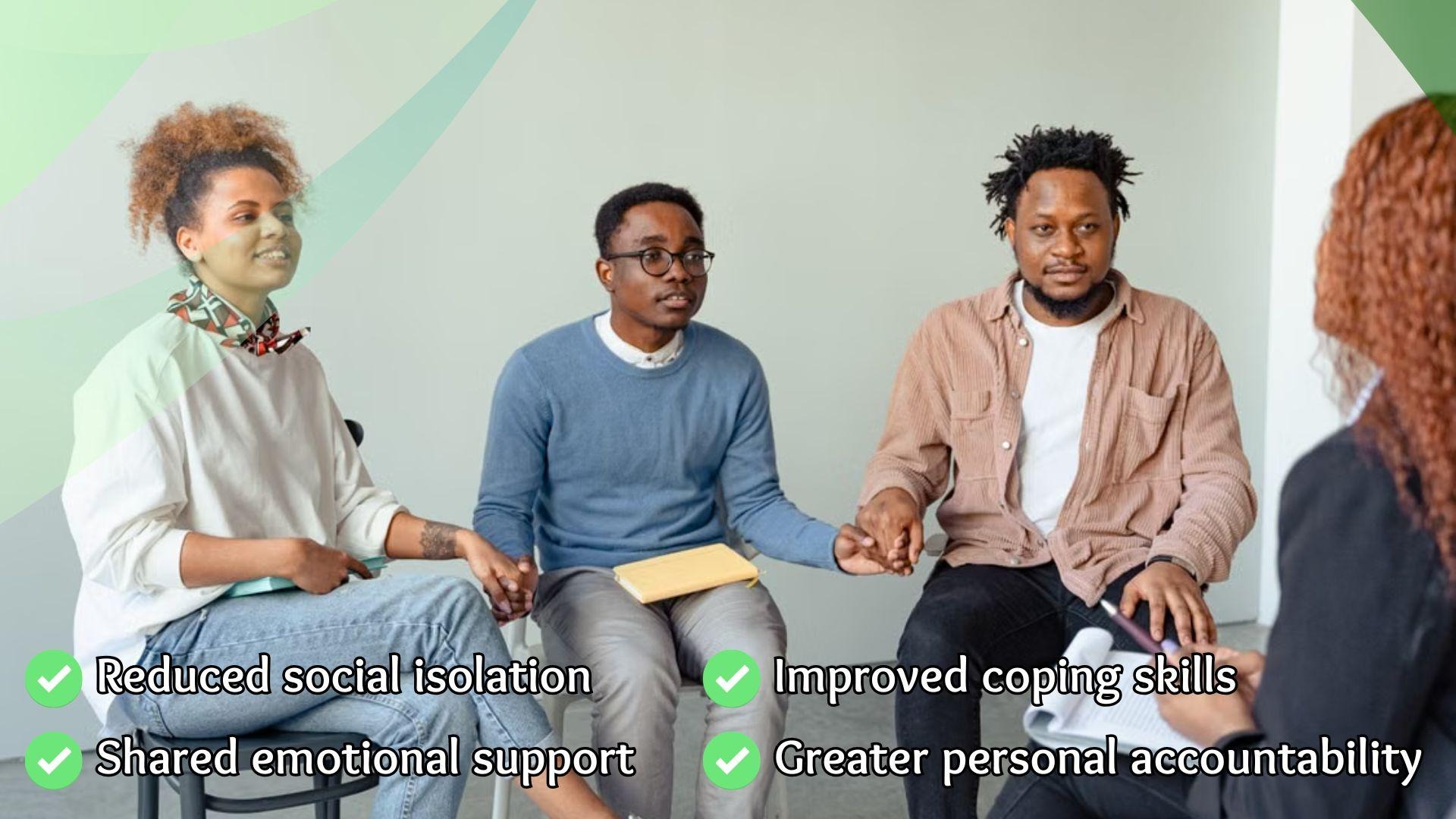
Group therapy during an intensive outpatient program (IOP) helps individuals build connections with others who understand the challenges of addiction and recovery. Regular group sessions can reduce social isolation and provide emotional support through shared experiences. Participants can also develop healthier coping skills, learn from others, and build personal accountability as they work toward long-term recovery.

Support Between Sessions

The time outside appointments gives you opportunities to apply what you’ve practised. Suppose a stressful workday would usually lead you to drink. You could try a coping response agreed with your therapist and discuss what happened at your next session.

Practical arrangements matter too. Travel and childcare can add time beyond the published timetable, and separate appointments may need their own space in your week.

We recommend clarifying whom you can contact if difficulties arise between visits. Ask about response times and after-hours arrangements before you rely on that support. IOP attendance does not mean someone continuously monitors you at home.

What Conditions Does IOP Treat?

IOP can treat substance use disorders, mental health conditions, or both. That depends on the programme’s clinical scope. 

This article focuses on alcohol and drug treatment. An intensive outpatient program for substance use disorders may also address co-occurring mental health needs within its treatment plan.

Mental health IOP focuses on psychiatric needs and can support people with conditions such as depression or anxiety when that level of care fits. However, an IOP label alone tells you little about which diagnoses or age groups a provider serves.

We recommend checking that the team treats your specific needs before you make arrangements to attend.

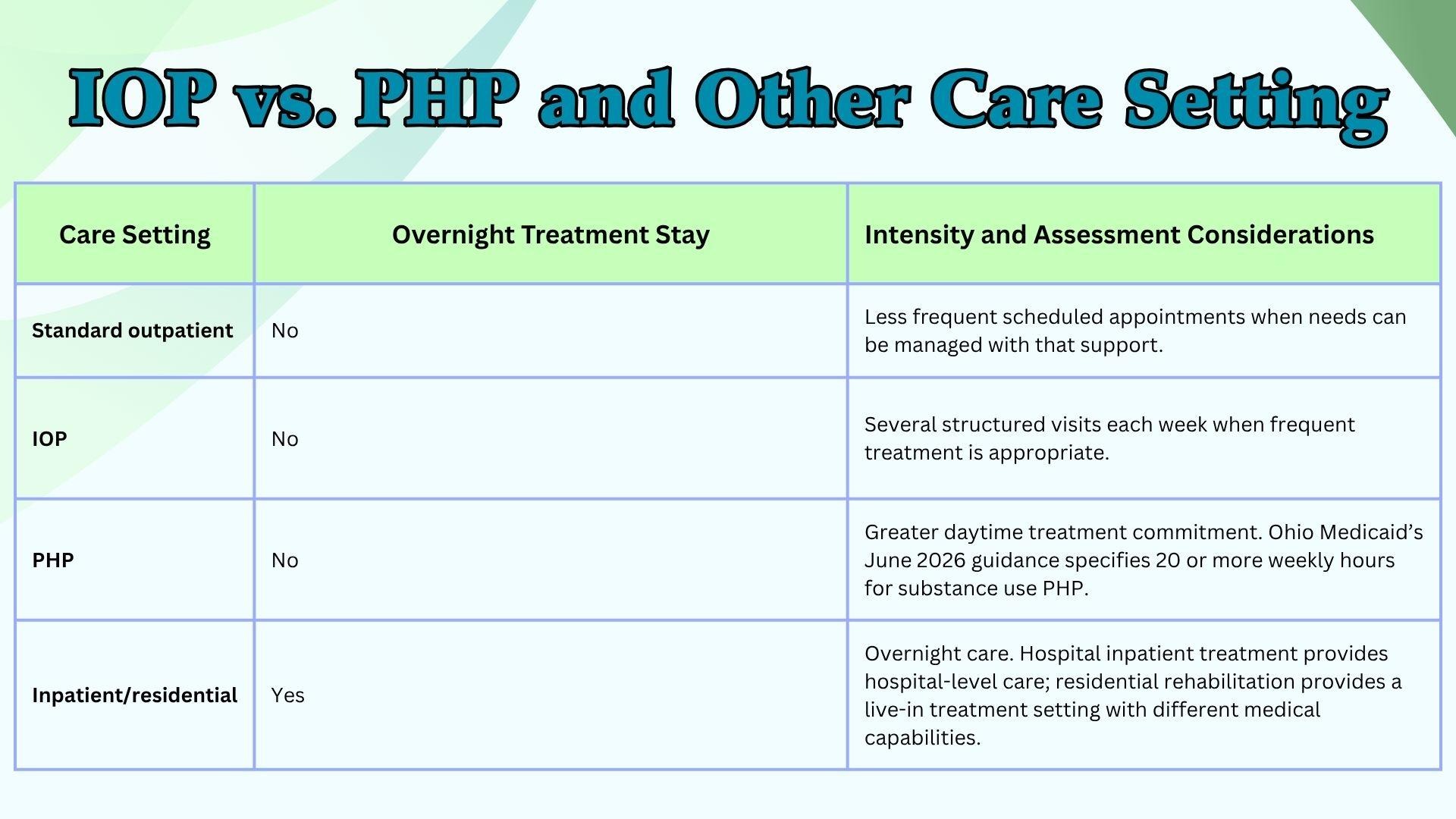
IOP vs. PHP, Outpatient and Inpatient Care

These care settings differ in the amount of support they provide and where you receive it. The best fit depends on what you need to manage safely between appointments.

Here are the main differences.

A comparison table explaining the differences between intensive outpatient programs (IOP), partial hospitalization programs (PHP), standard outpatient care, and inpatient or residential treatment. Standard outpatient care and IOP provide scheduled treatment without overnight stays, while PHP requires a greater daytime commitment. In Ohio, substance use PHP generally involves 20 or more treatment hours per week under the cited Medicaid guidance. Inpatient and residential programs involve overnight stays, with the appropriate level of care determined through clinical assessment.

Our guide to the differences between inpatient and outpatient rehab explains more about treatment settings.

The PHP threshold comes from the same Ohio Medicaid guidance as the substance use IOP hours above. Mental health programmes may use different schedules. These differences also affect the practical arrangements you make outside treatment. 

A shorter timetable may seem easier to manage, but clinical assessment should guide the setting that can meet your needs.

What Are the Requirements for an Intensive Outpatient Program?

Admission to IOP depends on a clinical assessment and the programme’s criteria. That assessment considers whether the available care can meet your needs safely.

Here are the main areas the team reviews:

  • Current needs: your substance use, symptoms and previous treatment help establish what support is appropriate.
  • Withdrawal and health risks: the team considers withdrawal risk alongside medical or psychiatric needs.
  • Support outside treatment: your living situation and available support matter between visits.
  • Participation barriers: transport and scheduling difficulties need a workable plan.

Previous inpatient treatment is not a universal prerequisite. Detox may be needed depending on your circumstances, and IOP attendance cannot replace medically necessary withdrawal care.

P.S. Our explanation of the difference between a hangover and alcohol withdrawal provides background, but a clinician should assess withdrawal concerns before you change your alcohol use.

How Legends Recovery Can Help You Take the Next Step

At Legends Recovery, we offer an intensive outpatient program for addiction in Cleveland. Our programme includes treatment and contact with a therapist between sessions. 

You can learn more about our IOP in Cleveland and speak with us about whether it fits your current needs.

That conversation is also a chance to confirm the timetable and understand payment arrangements before you make plans. We offer other addiction treatment levels too, so you can discuss options if a different setting is appropriate. 

You don’t need to arrive with a firm decision about IOP. Bring your concerns and the practical details that could affect your ability to attend.

Take the Next Step

What is IOP likely to involve in your situation? 

A conversation about your needs can make that clearer. If you’re considering treatment in Ohio, contact our team to discuss whether IOP fits and what you would need to arrange before you begin.

FAQs

How Long Is an IOP Program?

An IOP programme’s length depends on your treatment needs, progress, and the provider’s plan.

How Much Does IOP Cost?

IOP has no single price that applies to every programme or patient. Your scheduled services and insurance arrangements affect what you pay. Network status, authorisation, and your deductible matter, as do copayments or coinsurance.

We recommend requesting a written estimate before treatment starts. It should identify included services, anything billed separately, and any coverage limits that could affect your bill.

Does IOP Work?

IOP can help when its treatment and support fit the person’s needs. A single-site trial of substance use IOP found that reduced substance use persisted longer with an added behavioural activation intervention than with usual care. That finding concerns the approach studied and cannot establish results for every programme.

October 23, 2026

Can You Overdose On Suboxone?

Medication-assisted treatment (MAT) is fast becoming a preferred treatment during medical detox because of the troubles it could mitigate for the patient, and for the relative comfort, it gives relevant to withdrawal symptoms.

Medications such as buprenorphine, suboxone, acamprosate, disulfiram, and naloxone are a few of the medications typically used in medication-assisted treatment, and treatment centers are reporting that most people who undergo MAT respond positively to the treatment.

With information on everything being readily available, however, a growing number of people are doing online searches on “can you overdose on suboxone” as news of people overdosing on substances has become a major reality.

It should be noted that the premise of an overdose applies to anyone who takes more than the necessary amount of a medication or a substance. The patient does not necessarily need to manifest life-threatening for the usage of the medication or substance to be classified as already being in overdose territory. In the context of using suboxone, a person may be classified as overdosing on it if the person also happens to be mixing it with other sedatives such as benzodiazepines.

Overdosing solely on suboxone is immensely difficult, as this medication is only a partial opiate receptor agonist, meaning there is a limit to how much opioid receptors could be activated by taking suboxone only.

Activating the opioid receptors is what triggers the euphoria effect that gets people hooked heavily on opioids. As this effect is very limited in suboxone, people don’t bother to use it as much as other opioids to get the euphoric feeling delivered by opioids.

At Legends Recovery in Cleveland, Ohio, we help people suffering from drug addiction recover and get their life back.

What is Suboxone Used For?

Suboxone overdose

Suboxone is a medication used in the medication-assisted treatment of opioid addiction. It contains buprenorphine with is a partial opioid agonist, which blocks the opiate receptors. This blockage effectively reduces the severe urges that typically hit a patient in medical detox, and sometimes even into rehabilitation. It should be noted that although it contains buprenorphine, which is a partial opioid agonist, suboxone itself is classified as an opioid antagonist, which negates the effects of opioids by preventing the activation of opioid receptors. This is also one of the main reasons why a suboxone overdose is hardly ever heard of.

Suboxone also contains naloxone, and this component is responsible for reversing the effects of opioids. This reversal is largely important in dealing with the withdrawal symptoms that the patient goes through during medical detox. In most cases, patients who were addicted to opioids felt the agonizing combined effects of intense cravings and withdrawal symptoms during medical detox.

More and more treatment centers are using suboxone as the preferred treatment medication for opioid addiction, as methadone, another opioid agonist medication used in opioid addiction is habit-forming. Methadone was the earlier medication used in MAT, but suboxone was expressly created to help in dealing with opioid addiction, and as such was intentionally crafted to have a far lower risk of developing a dependency than methadone.

What are the Side Effects of Suboxone?

As with any other medication or substance, suboxone comes with side effects that could cause anything from slight discomfort to serious ill effects. These side effects could manifest differently in those who use suboxone, although the primary consideration regarding side effects is the possibility of an allergic reaction, which could lead to the most severe side effects.

Some of the more common side effects of suboxone include:

  • Numbness of the mouth
  • Reddening of the mouth
  • Mouth pain
  • Headaches
  • Dizziness
  • Numbness or tingling in various parts of the body
  • Drowsiness
  • Insomnia
  • Stomach pains
  • Vomiting
  • Constipation
  • Diarrhea
  • Sensation of inebriation
  • Difficulty in concentrating
  • Nausea
  • Profuse sweating
  • The sensation of pain or burning in the tongue
  • Fainting
  • Irregular heart rate
  • Blurry vision
  • Back pain
  • Depression
  • Anxiety

There are also cases where the use of suboxone led to more serious side effects, with most of the effects associated with a severe allergic reaction to the medication, or complications arising from either an interaction with another substance or from the medication adversely affecting a pre-existing condition.

Some of the more serious side effects of suboxone include:

  • Severe allergic reaction
  • Swelling of lips, tongue, or throat
  • Difficulty in breathing
  • Coma
  • Hormone problems (adrenal insufficiency)
  • Liver damage
  • Tachycardia (elevated heart rate)
  • Agitation
  • Confusion
  • Hallucinations
  • Difficulty waking up
  • Severe dizziness
  • Slurred speech
  • Loss of coordination
  • Extreme weakness
  • Persistent lightheadedness
  • Hives
  • Muscle stiffness
  • Loss of appetite
  • Runny nose
  • Watery eyes
  • Shivering or chills
  • Dark urine
  • Clay-colored stool
  • Jaundice
  • Breathing that stops during sleep

Medical personnel must be informed immediately should the patient experience any of these effects, as they could worsen quite quickly and potentially lead to a life-threatening situation. Suboxone overdose-related deaths are extremely uncommon, but it is still possible. Instances of death could arise from a severe complication or adverse reaction to this medication.

Are there Other Medications that could Interact with Suboxone?

Suboxone may cause an interaction if taken or mixed with other medications or substances. It is important to inform the physician if any other medication or substance is being taken or might still be in the system before suboxone is given.

Some of the medications or substances that could interact with suboxone include:

  • Benzodiazepines
  • Erythromycin
  • Rifampin
  • HIV protease inhibitors
  • Cold or allergy medicines
  • Bronchodilator asthma/COPD medication
  • Diuretics
  • Motion sickness medications
  • Antidepressants
  • Medications for Parkinson’s disease
  • Acetaminophen
  • Medications that lower cholesterol
  • Oral contraceptives
  • Verapamil

What are the Symptoms of a Suboxone Overdose?

While the chances of a suboxone overdose are minimal, it is still a possibility, although considering what this medication is for, it is also something of an irony. This is because the symptoms documented in cases of suboxone overdose treatment show that the symptoms are similar when a person overdoses on opioids. It bears noting that suboxone was specifically made to deal with opioid addiction.

Signs and symptoms that indicate a possible suboxone overdose include:

  • Pinprick pupils
  • Extreme drowsiness
  • Severe fatigue
  • Confusion
  • Persistent dizziness
  • Blurred vision
  • Blue-tinged lips and fingernails
  • Slurred speech
  • Loss of coordination

What is the Treatment for Suboxone Overdose?

Overdosing On Suboxone

Treating a case of suboxone overdose is quite problematic because suboxone has a particularly long half-life. The half-life of a substance is the time it takes for the amount of the substance’s active ingredients in the body to be reduced by half. This process could largely depend on certain factors, such as how fast the body could process and get rid of it. Depending on the person’s ability to metabolize the substance, and also on the behavior of the substance once taken, the body could take anywhere from a few hours to several days, or sometimes even weeks, to completely get rid of the substance.

In the case of suboxone, to treat an overdose of this medication, an anti-overdose drug must be periodically administered repeatedly until the medication is completely flushed out of the system. Examples of medications used in this process include naltrexone, and to a lesser extent, naloxone.

In the rare occasions that it does happen, a person who has overdosed on suboxone may require constant monitoring at a residential treatment in Ohio to watch out for whatever adverse effects might arise. This is because one of the most worrisome things to happen during an overdose is a potentially fatal complication.

Another avenue of overdose treatment is the traditional one used to remove as much of the substance as possible. Activated charcoal and laxatives are alternative solutions used to absorb the toxins, or help the body in expelling them. Depending on the condition of the person, intravenous fluids are also used to prevent possible dehydration. This is important because dehydration could cause the person having an overdose to go into shock, and this in itself could already become a life-threatening situation.

People who suffer from a suboxone overdose cannot be given replacement medications to deal with their opioid addiction as this could cause further complications. Depending upon the condition of the person following a suboxone overdose, a physician might still allow them to take medications to help lessen any withdrawal symptoms they might still be feeling.

Our Detox Center at Legends Recovery of Ohio Can Help

Detox in itself is already quite difficult, and any other complication that might arise during the process could make the entire experience even more so. This is why our drug detox center in Ohio pays, attention to every nuance a patient might have during the detox process, so we could help in any way we could. We know this because we have helped so many people through their most difficult periods here at Legends Recovery, and they have all come out of it all the better.

Medical detox is never easy, but it becomes more bearable when you are working with people who care enough to know when someone needs help. Asking for help during difficulty is not a weakness, but helping those who need it is a strength. This is our strength here at Legends Recovery. Come talk to us now and let us see how we could help you best on your way to a true and lasting recovery.

‍

October 15, 2026

Alcohol and Your Immune System: How Getting Sober Can Boost Your Health

Ah-choo!

Is it just us, or is it the time of year when you or someone you know is sick?

Being an adult while unwell is challenging enough. Getting sick, however, has its share of dangers for individuals in recovery from drug and alcohol addiction. You may have already guessed it: alcohol is present in many cold and flu treatments. Nyquil, we’re talking about you!

For instance, some medications make you feel sleepy like downers, while others make you feel alert, which are known as uppers.

Experiencing all of these emotions can be particularly triggering, especially for people who are in recovery.

At Legends Recovery Center of Ohio, our rehab facilities provide treatment programs, addiction therapy, and other treatment resources to help people struggling with the diseases of alcoholism and mental illness.

Here’s our guide to alcohol and your immune system, and how getting sober can boost your overall health.

What is the Immune System and How Does it Work?

Our body’s immune system is made up of white blood cells, tissues, and organs that are intended to fight off infections, diseases, and toxins. It aids in maintaining our overall health and well-being. However, when a person’s immune system is compromised, for instance, drinking copious amounts of alcohol, it makes the body more susceptible to illness and infection.

The immune system consists of two main components:

  • The innate immune system: This response to pathogenic bacteria, viruses, and other microbes, along with providing overall immunity.
  • Your immune memory: This is taken care of by your adaptive immune system. It includes things like recalling the symptoms of an earlier infection, such as chickenpox, and preventing a recurrence by taking the right precautionary measures.

Drinking negatively affects both immune system components. There is no “safe” amount to consume. Every organ in the body is affected both immediately and over time.

The Impact of Alcohol on the Immune System

Your body treats alcohol as a toxin, thus it needs to be flushed out. Every time you drink, your immune system has to work harder to defend your organs from tissue damage. Increased vulnerability to other ailments is the result.

Research from the Alcohol and Drug Foundation (ADF) shows that heavy drinking can cause a 3-7 times greater susceptibility to the development of serious illnesses like pneumonia from simple respiratory tract infections.

One may observe they tend to get sick more frequently than they did before the shift in alcohol use as drinking becomes more frequent or excessive. The sickness symptoms are worse than what a person could experience when they are just hungover.
[lightweight-accordion title=”Short-term effects of alcohol on the immune system”]
Alcohol can have an impact on the immune system even if you are not a heavy drinker regularly. A single session of 5–6 drinks can depress the immune system for up to 24 hours.
[/lightweight-accordion]
[lightweight-accordion title=”Long-term effects of alcohol on the immune system”]
Since the immune system takes longer to detect and respond to illnesses, drinking over time can result in longer-lasting issues. The following are some long-term effects:

  • More severe diseases
  • Longer-lasting symptoms
  • More Infection forces the immune system to work harder.

Drinking alcohol regularly over time harms the body, its systems, and every organ. Binge drinking also impairs your immune system’s ability to fight off diseases like liver disease, some malignancies, and viruses. Other side effects that taking drugs and drinking alcohol has on the immune system include:
[/lightweight-accordion]
[lightweight-accordion title=”Chronic Inflammation”]
According to research, regular drinking can lead to intestinal inflammation that harms the remainder of your gastrointestinal (GI) tract in addition to your liver. An immune system reaction called inflammation serves as a barrier between the body and potential harm. It can, however, have a negative effect and result in long-term health issues if it is extended.

Unwanted antigens stay in your body instead of your body purging bacteria or toxins from its system and returning to a healthy baseline. As a result, inflammation levels are high and the immune system is kept constantly on high alert. The result can cause a wide range of health issues, such as arthritis, asthma, heart disease, Crohn’s disease, insomnia, and different types of cancer.
[/lightweight-accordion]
[lightweight-accordion title=”Greater Risk of Infection”]
You are more prone to experience recurrent infections or potentially serious problems since chronic inflammation reduces your body’s capacity to fight against various diseases. When alcohol is absorbed into the body, a person’s red blood cells can become enlarged, and also interfere with the growth and operation of white blood cells.

This makes the body work even harder to defend and protect itself from being vulnerable to the invasion of infection and bacteria. Even respiratory illnesses like pneumonia and even COVID-19 are more likely to be contracted by someone with an alcohol use disorder (AUD).
[/lightweight-accordion]
[lightweight-accordion title=”Poor Sleep”]
Your body and mind are meant to rest and repair when you sleep. Alcohol severely impairs this crucial process. Any time you drink alcohol, even just one beer or glass of wine, your body changes its concentration right away. It puts removing alcohol from your system before caring for your general health. This implies that other crucial processes, like sleep, suffer.

Tiredness is simply one of the side effects you could experience from drinking since it makes it harder to fall asleep, and sleep affects how well your immune system can defend itself. Additionally, you are more prone to get sick more frequently and with severe symptoms.

An inability to get enough rest and re-energize your body can exacerbate the symptoms of poor mental health, especially for individuals with insomnia, depression, anxiety, frequent mood swings, and chronic stress.
[/lightweight-accordion]

How Does Drinking Alcohol Affect the Immune System?

effects of alcohol to your immune system

Bacteria can more easily enter the bloodstream when the immune system of the body weakens. In other words, due to inadequate protection and removal of toxins by the lungs, our immune system becomes compromised due to exposure to viruses. It is already inconvenient to get colds frequently. However, the risk of developing major respiratory and other chronic illnesses due to heavy drinking is considerably more worrisome.

Is it the Flu Or Withdrawal Symptoms?

This time of the year sickness is rampant. Cold chills, high fevers, and a dry cough might give off the unsettling impression that something is attacking your immune system. In the end, viruses are what cause both the flu and COVID-19.

Although seasonal influenza (flu) viruses are detected all year round in the United States, the “flu season” is when these viruses most frequently spread.

According to the Centers for Disease Control (CDC), the actual start and end dates of flu seasons might vary, although October is often when activity spikes. Flu activity often reaches its peak between December and February, though it can persist into May. The timing and duration of flu activity have become less predictable since the COVID pandemic began.

Therefore, especially around this time of year, most people mistakenly believe that their symptoms of runny nose, watery eyes, sneezing, and upset stomach are caused by the “common cold” or “flu,” but in reality, they are typically caused by withdrawal symptoms. It’s quite simple to confuse the two.

That’s why it’s important to protect yourself as much as possible to avoid putting yourself at risk. But, sometimes it’s inevitable, especially for those with addiction and mental health issues.

Take into account the following suggestions to help you determine if the symptoms you are displaying are genuinely those of a disease or a side effect related to alcohol withdrawal:

  • First, consider how long you have been drinking and how much.
  • If you recently (within the past 12-48 hours) quit drinking alcohol after prolonged use (5 days or more) then chances are you are withdrawing.
  • Mild alcohol withdrawal symptoms usually only last about 24-48 hours (1-2 days). Symptoms that persist depending on the situation can indicate the flu or something more severe.
  • Flu-like symptoms that go away when drinking is most definitely withdrawal.
  • If symptoms don’t become worse, are not accompanied by a cough or headache, and are not reduced with over-the-counter medications, they are most likely withdrawal.

So, is a sickness really what’s occurring? Or is there a symbiotic relationship between alcohol and your immune system?

It’s Okay to Ask for Help

According to research conducted by the Cleveland Clinic, over 20 million people in the United States have at least one substance use disorder (SUD). But, perhaps it will surprise you to learn that out of all those Americans who struggle, don’t receive the treatment they need.

Asking for assistance when we need it can be the hardest thing to do. However, it’s crucial to request and accept any assistance that friends, family, sponsors, or other members of the recovery community may be able to provide when you’re unwell.

The most crucial thing to keep in mind is that you are not alone in your battle against drug and alcohol abuse, and you are also not alone when trying to recuperate during the worst of the flu season.

No matter how long you have battled drug or alcohol addiction, please keep in mind that it is never too late to ask for assistance. There are options available if you are having trouble quitting and navigating these unprecedented times when you’re unsure of how to proceed.

Can Rehab Help Getting Sober?

rehab for alcohol addiction

Even if you have been drinking heavily for a long time, you can start working toward sobriety and repairing the harm that drinking has done to your immune system. The first step to a new life and a healthy body is medical detox.

You must wait for all of the alcohol to leave your system before continuing. Detoxification at a rehab facility can provide a safe and professional environment to ease withdrawal. It is highly discouraged to self-detox at home, as it can be painful and dangerous when done alone without supervision by a licensed medical specialist.

Your immune system will require time to recover following a thorough detox. You may aid it by gaining knowledge about diet, getting active, and taking care of any underlying issues with your physical and mental health.

Total well-being for the body and mind is addressed at Legends Recovery Center in Ohio. You’ll learn to live a full life as a result and strengthen your immune system free from addictive substances.

Getting Sober Starts With You

It’s important to recognize the signs and symptoms of an alcohol use disorder. If you or someone you care about is abusing alcohol, and needs help, consult with your doctor about undergoing medical detox and treatment.

Alcohol and your immune system will no longer be a threat to living the life one deserves! Contact our admissions team today to learn more about the addiction treatment services we offer, and to get started on your road to recovery.

https://adf.org.au/insights/alcohol-immune-system/

https://desertcoverecovery.com/blog/how-getting-sober-can-boost-your-immune-system/

https://serenitylane.org/blog/your-sick-when-sober-survival-guide/

https://www.cleanrecoverycenters.com/withdrawals-the-flu-or-something-else/

https://www.opiate.com/withdrawal/mild-opiate-withdrawal-symptoms-vs-the-flu/

‍

Stay connected

Occasional resources and encouragement for the road ahead, whether it's yours or someone you love. No spam, unsubscribe anytime.
Thank you! Your submission has been received!
Oops! Something went wrong while submitting the form.